Architecture (DipArch)

Key Facts

Staff

Programme Overview

How to Apply

Applications for DipArch should be made direct to the School - submitted to the GSA Registry (contact registry@gsa.ac.uk)
DipArch is also available in part-time mode. The deadline for submission is the end of February 2013.

Award

DipArch/Masters of Architecture by Conversion Exemption from Part II of RIBA/ARB Examination in Architecture. All GSA degrees are validated by the University of Glasgow, a Russell Group institution in the top 1% of the world’s universities.

Assessment

Major project, a Design Thesis which encompasses all the ambition, dreams and accumulated skills expected of a student nearing the completion of their education. It is a vehicle for personal study, in which the topic is selected by the student in accordance with their particular interests and developed in association with the tutorial staff. Projects explore a variety of site conditions: from the urban centres of Glasgow, London, and other major International cities to rural sites dealing with spectacular landscapes. The project is developed through from concept design to design in detail.

Facilities
An excellent range of facilities - lecture theatre, Grace and Clark Fyfe Gallery, cafe bar, technical library and RIBA Information Service.

Indicative Material Costs
Stage/Year 4: £520
Stage/Year 5: £1000
Additional costs will be incurred for activities such as study trips and workshops.

Continuing Student Tuition Fees
Students who are continuing onto the Diploma directly after completing RIBA 1 (BArch + 1 year work placement) will be considered as continuing students for tuition fee purposes - ie not subject to the RUK tuition fee rate.

Graduates include:
Charlie Hussey and Charlie Sutherland (Sutherland Hussey Architects); Christopher Platt (Head of Mackintosh School of Architecture/studioKap); Gerry Grams (Glasgow City Council); Ian Alexander and Henry McKeown (JM Architects); Russell Baxter (Davis Duncan Architects); Gareth Hoskins (Gareth Hoskins Architects); Riccardo Marini (Edinburgh City Council); Andrew Whalley (Nicholas Grimshaw); Ross Hunter (Graven Images); Andy Bow (Foster Associates)

Programme Leader
Jo Crotch BArch(Hons)

Stage Leaders
Mark Baines BArch DipArch
Robert Mantho ARB

Visiting Professors
Prof. James Pickard
Prof. Brian Evans
Prof. Gerry Grams

Programme Overview

Programme is designed to provide the necessary educational framework for students who intend to enter the architectural profession, and confers exemption from Part II of the Examination in Architecture ARB/RIBA and offers an intensive training in the forces acting on building, and the specific skills of the architect. Project-based, it centres on contemporary issues of urban building, the work ranging from live projects and sponsored research to competitions and theoretical studies.  

The first year is the opportunity for you to extend design skills within a rigorous creative studio and to explore architecture as a response to the contemporary issues. Glasgow is one of the UK's most architecturally stimulating cities and we use Glasgow within the context of contemporary, sustainable, Compact City theory.  Visiting critics bring a fresh perspective to studying in Glasgow, a city which itself provides a powerful stimulus to studying architecture.

Students who achieve a distinction in the final design thesis of the Diploma programme may be eligible to proceed to a programme leading to the award of a masters degree, MArch (by conversion), where there is an opportunity to develop an aspect of the thesis design in greater depth. Students progressing prepare a special piece of work relating to their final design thesis supervised by the Professor of Architecture.

The programme takes a further term of full-time study or by agreement with the Head of School, three terms part-time. Students develop ideas stemming from their previous work and develop fluency in the discussion of contemporary issues, encouraging them to place their own work in the wider context of current architecture and society.

Students are encouraged to devise and organise a public exhibition of their work.

The School attracts students of all nationalities and the programme is studio-based with all students working in one space. This provides an ideal environment to share advice and ideas across the years of study.  

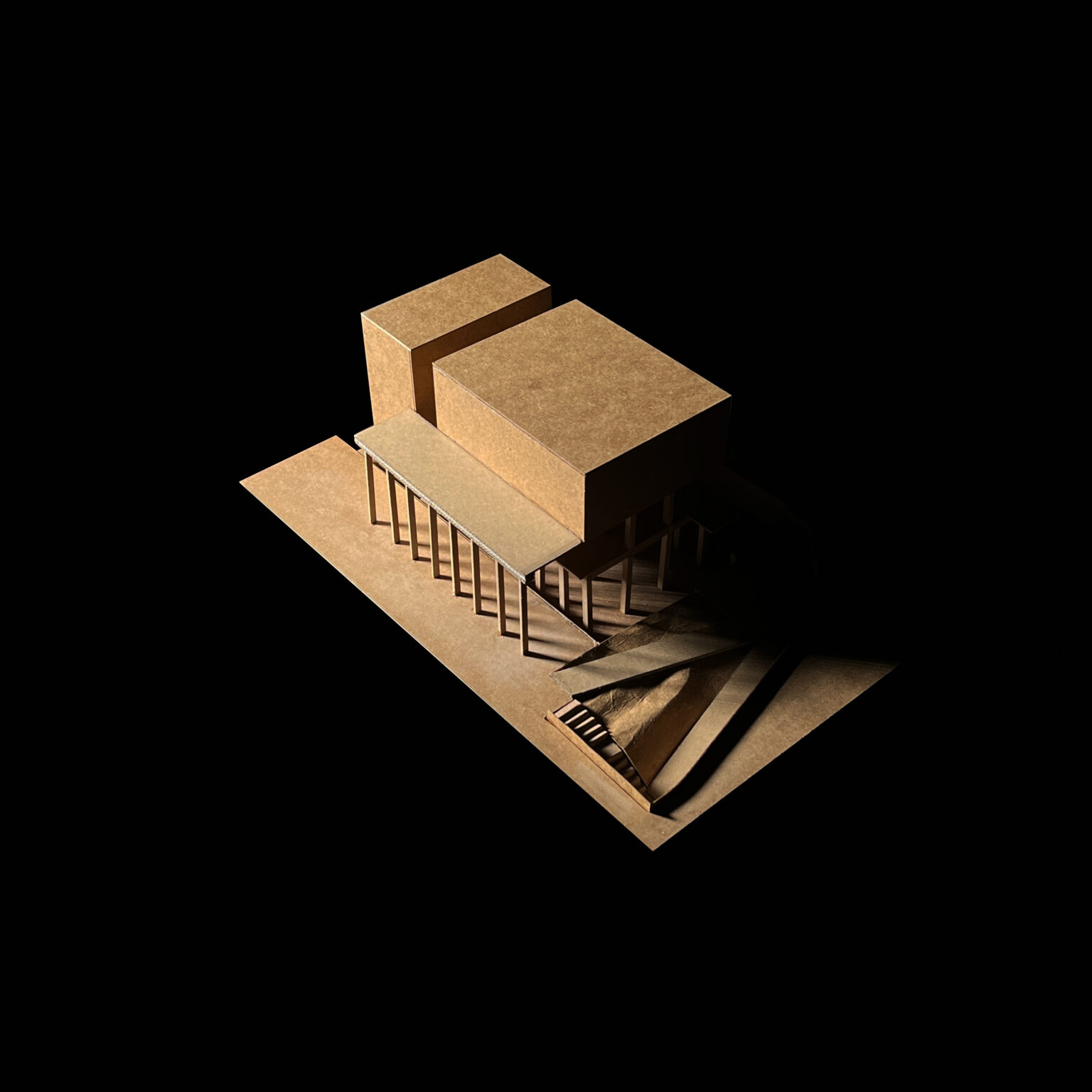
Emphasis continues to be placed on drawing and model making as means of rigorously investigating, clarifying and developing a design. Some projects are undertaken as group work while others are used to develop the individuals design skills.

The projects typically include the design for a mixed use neighbourhood, high density housing, and the design of a cultural building within the inner city. In 2008-9 projects included the design of neighbourhoods and housing in Glasgow and a 'Contemporary Art Gallery' in Glasgow's city centre.